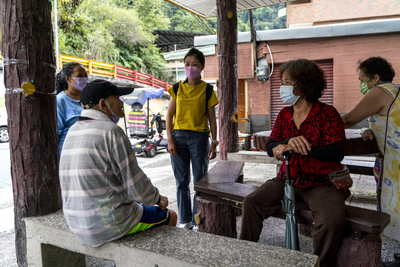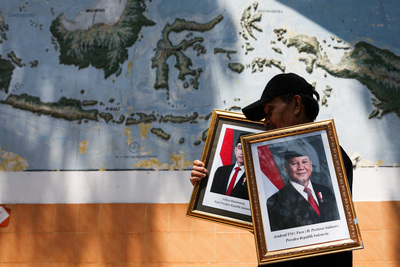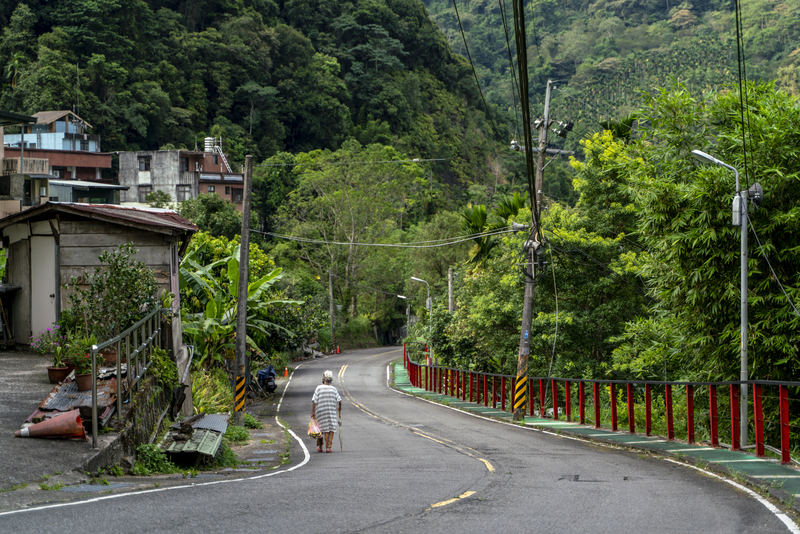
“Aging in place” has always been a core principle of the Taiwanese government’s long-term care policy. However, in reality, indigenous elders with dementia often struggle to remain in their own communities as they age.
The Reporter visited two Atayal villages under differing circumstances to examine how current dementia care policies conflict with the core “collective-caregiving” culture of these communities, driven by state-led standardized regulations and professional assessments. At the same time, we aim to learn from these villages, recognizing the unique caregiving environments fostered by their close-knit community networks. We therefore ask: What insights might these communities offer [to wider society] in developing “dementia-friendly communities.”
At the end of December 2021, the Hanxi Dementia Care Center in the Hanxi village of Datong Township, Yilan County, shut down after just nine months of operation. The center was run by 38-year-old Yunaw Sili (Han name: Song Sheng-Jun), chairman of the Kangkei Indigenous Sustainable Development Association, and 22-year-old care manager Lapi Hayun (Han name: Luo Yu-Han). They bid farewell to their last dementia patient before closing the Center.
Six or seven years ago, an 85-year-old villager, Ba’ai (pseudonym), began showing signs of dementia. Villagers often saw her wandering around the community. In March 2021, Yunaw accompanied several elders and their families on multiple trips to Luodong, a 30-minute drive down the mountain, for dementia evaluations. Ba’ai was diagnosed with moderate dementia, while two other elders were diagnosed with mild dementia. Together, they became the first group of participants at the Hanxi Dementia Care Center. The care manager Lapi, who grew up in Hanxi Village, incorporated traditional Atayal songs and weaving techniques into cognitive stimulation activities designed to slow the progression of dementia. Although Ba’ai’s hands had grown less nimble, she was still able to complete familiar weaving tasks at a slow and steady pace. Over several months, her condition stabilized significantly.
However, by the end of the year, the Hanxi Dementia Care Center was forced to close down after failing the government’s evaluation.
At the facility, Ba’ai shares a room with her relative, Telu (Han name: Li A-You), who is also from Hanxi Village. Eighty-year-old Telu had been living in the facility for three years due to dementia. From time to time, she murmurs in her native language:
“This is the home of the people from the plains, not my home…”
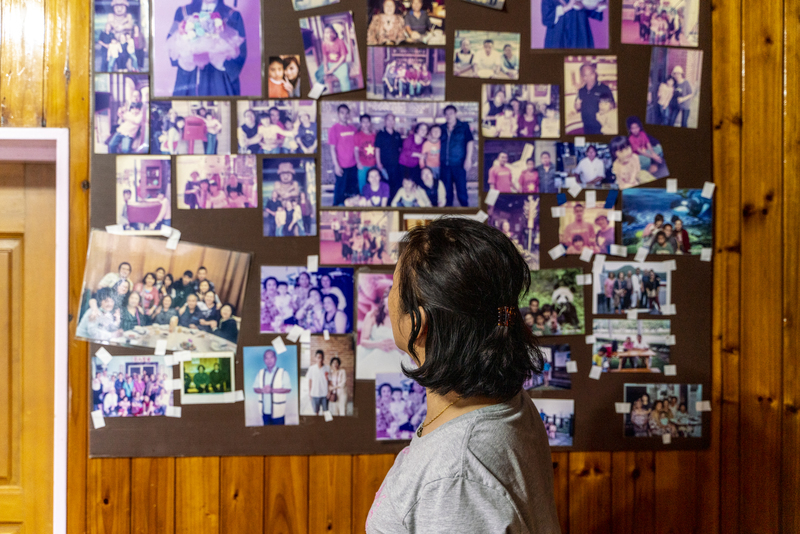
Telu was one of the first women who advocated for elderly indigenous people to spend their final years in the tribe.
“We have no history of sending our elders away!”
Besu Piyas (Han name: Fang Hsi-En), the supervisor of the Kangke Association, explained that in the Atayal language of Hanxi, there is an ancestral saying: “ana musa inu ga, ini z’ngi isu ga Kangke no sure” (No matter where you go, never forget you are from Hanxi). This saying serves as a reminder to the tribe members that human life is deeply connected to the land, and each person is like a branch of a great tree. After growing old and withering, one must eventually return to the soil to continue nourishing the roots of the tribe. However, after Telu developed moderate dementia, she too became one of the elderly sent away to a distant place. For the dementia sufferers of the tribe, adhering to this ancestral teaching in their old age has become increasingly challenging.
Over the years, Yunaw has repeatedly witnessed elders with dementia being forced to leave the tribe, which has weighed heavily on his heart.
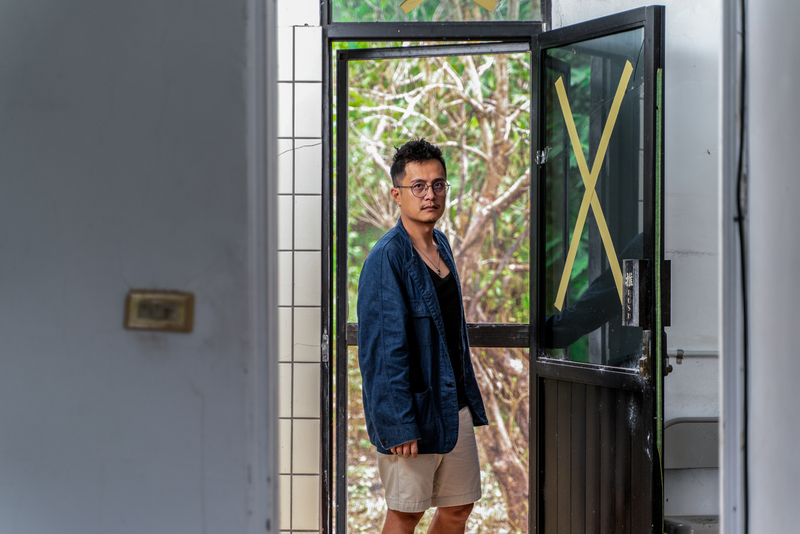
As Taiwan’s long-term care policies developed, the discussions around the legislation of 2014 Long-Term Care Services Act were in full swing. Meanwhile, the government introduced a blueprint for the “professionalization” of long-term care, introducing regulations on spaces, personnel, and more. However, these measures raised the bar for implementation in indigenous communities. The Kangke Association suddenly found that their original home-based care services might become “illegal” under the new framework.
That same year, the Kangke Association attempted to adapt their services to the government’s planning. They started with community care centers and then progressed to long-term-care alley stations. In 2021, several elders in their station began showing signs of dementia. Among them was Ba’ai who frequently ran out of the station during activities. The alley station, already short-staffed and lacking experience in dementia care, struggled to keep an eye on her. In response to these challenges, Yunaw sent Lapi to take dementia care training and then applied to establish a local dementia care station.
Following the rollout of Long-Term Care 2.0 in 2017, the government categorized long-term care facilities into three levels—A, B, and C. The C-level facilities, long-term care alley stations, play a frontline role in the community. They are government-subsidized, with funding for one full-time caregiver and supplemented by locally recruited volunteers. These stations provide services such as communal meals, health promotion, and disability prevention for healthy, frail, mildly disabled, or mildly demented seniors. Typically, each station caters to 10 to 30 people.
In 2018, the government introduced the Dementia Prevention and Care Policy and Action Plan 2.0, which included a new facility category: dementia care stations. While also serving as a frontline community resource, dementia care stations differ from alley stations in their exclusive focus on dementia patients and their caregivers. They aim to assist suspected and mildly demented individuals. Seniors not diagnosed with dementia within six months of entering a dementia care station are transferred back to an alley station. To meet the specific needs of dementia patients, these stations are smaller, with optimal group sizes of 6 to 15 individuals (or 3 to 8 in remote areas). Personnel must meet stricter professional standards, including completing at least 20 hours of dementia care training.
Dementia requires intensive caregiving in terms of time and manpower. But in indigenous areas with limited job opportunities, working-age adults often leave during the day for work, sometimes traveling with crews for several days at a time. With no one to care for elders with dementia, families must rely on local care resources.
Moreover, dementia is a progressive condition that can only be slowed, not reversed. Once seniors enter moderate to advanced stages, their ability to live independently diminishes, and the caregiving burden significantly increases.
Lapi explains that her work at the dementia care station focuses on delaying the onset of dementia among elders while teaching families in the community to care for dementia patients. Her goal is to give families more time to learn caregiving skills before their loved ones reach moderate or advanced stages. “The slower the seniors progress toward severe dementia, more time families will have to adapt,” Lapi says. “When the time comes, families might feel less compelled to send their elders to a care facility.”
After the establishment of the Hanxi Dementia Center, the team quickly realized a significant gap between the government’s plans and the reality the tribe was facing.
For example, finding a venue was a major challenge since the beginning. Hanxi Village has few legal and large sites for residential and construction purposes. The Hanxi Dementia Center eventually settled in the only available public space—an old checkpoint located a 10-minute drive from the heart of the settlement.
Hanxi Village consists of four tribes, and some of the connecting roads are long and steep slopes. Elders with dementia live across different areas. Every morning, Lapi drove the association’s only van, picking up the elders along the way and bringing them to the center.
The center required an average of at least three attendees per day, but the challenge with transportation made it difficult to meet this threshold. This is because the indigenous region is vast in area and the Atayal people are used to live in dispersed settlements. Some neighboring tribal villages are separated by mountains, making the travel time easily exceed an hour. Despite conducting a “carpet search” across a few nearby villages, only three elders from the same village agreed to attend the center.
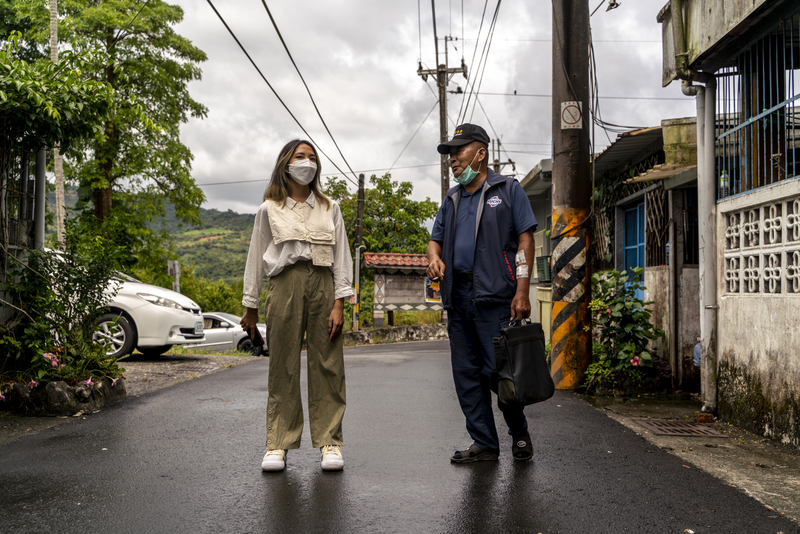
Given these challenges, the center could not afford to hire another full-time staff. Lapi had to design courses, teach, and transport the elders while also managing the complex administrative procedures. At times, Yunaw had to step in and handle these tasks himself and even seek voluntary help from another tribal member.
In addition to challenges with space, finances, and manpower, indigenous communities face difficulties stemming from government policies that fail to adapt effectively to local contexts.
Her first class at the dementia care station left Lapi with a strong impression.
“I need to go to my classmate’s place!”
“Where's my friend?”
As soon as the class began, everyone was anxious. The elders with dementia were eager to find their old classmates from the alley station where they had previously attended classes together.
The government, recognizing the specific care needs of dementia patients, mandated that dementia care stations be separate from other long-term care facilities. Lapi, who had interned at a dementia care station in the city, observed that elders there often came from different communities and lacked prior experience living together. In such cases, separating dementia patients helped prevent potential disruptions. However, for closely connected indigenous communities, this separation inevitably fractures the bonds among their elderly residents, tearing apart their communal ties.
“In the tribe, everyone grew up together. Even if we’re not related, we’re elementary school classmates or childhood friends,” Lapi remarked. She observed that many indigenous elders, rather than being irritated by the sudden disruptive behaviors of other dementia patients, often knew how to comfort their old friends better than the caregivers. For example, after the dementia care station closed, Ba’ai briefly returned to the alley station. When she wandered off, other elders would sometimes guide her back and comfort her, saying, “Let’s draw together!”
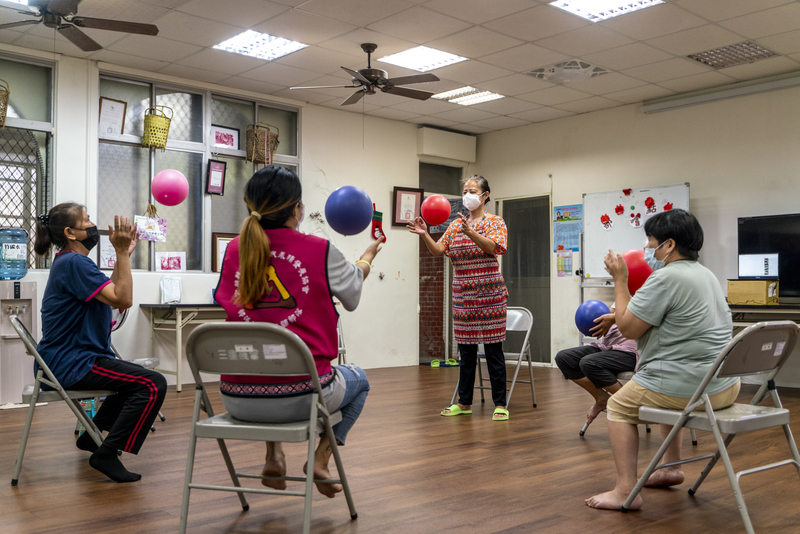
At the dementia care station, Lapi designed lessons rooted in the elders’ daily lives. She used tools like bows, bamboo baskets, and other props to teach Atayal weaving songs and dances, explaining, “This is the action of pounding millet... this is the action of weaving cloth... Our Atayal dances are all based on these daily activities!” Hearing this, the elders became animated and fully absorbed in the class. Even Ba’ai, who typically wandered around, remained seated throughout. However, when Lapi shifted to the government-provided lesson plans, which focused on teaching colors and shapes, the elders grew restless once again.
Lapi also often took the elders to the fields behind the station to plant millet and pumpkins. Elders, who had spent their lives farming, enjoyed showing their skills and sometimes even played the role of teachers in these activities.
Yunaw shared that, just before the dementia care station closed, he and the Taiwan Indigenous Long-Term Care Services Rights Promotion Association had presented their vision for elder care to the Long-Term Care Department. In his view, the elderly at both the alley station and the dementia care station belonged to the same community. He proposed that the two institutions share the same space and caregiving resources. This approach would help the alley station care for elders with [mild] dementia, preventing it from becoming overwhelmed, while also enabling the dementia care station’s care managers to train alley station staff in dementia care techniques. However, the Long-Term Care Department simply reiterated existing policy and suggested that, if the tribe insisted on sharing a space, they could “put up a curtain” to separate the two groups of elders. Yunaw laughed bitterly and remarked, “What’s the point of that?”
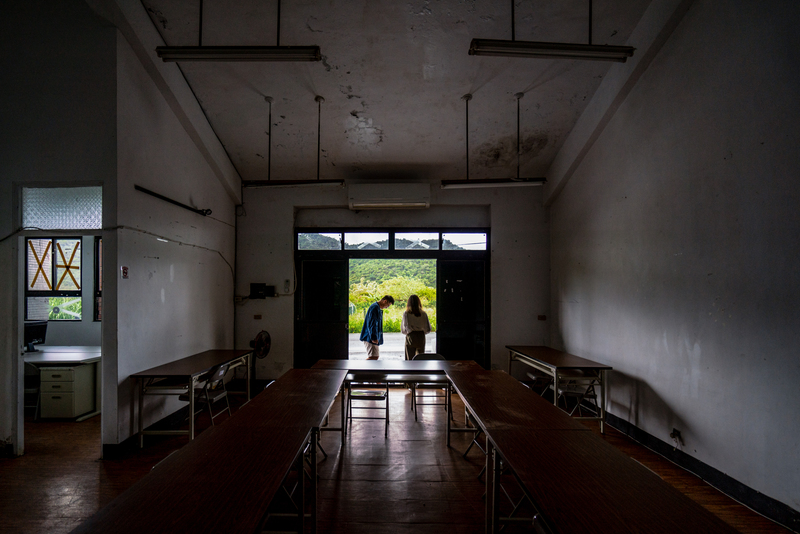
In the middle of November 2021, Hanxi Dementia Care Center received a “D” rating in [the government’s] evaluation, resulting in a one-year long suspension.
Li Shih-Hung, the executive director of the Catholic Chinese Sacred Mother Foundation, was one of the evaluators. He mentioned that during the on-site observation, Hanxi Dementia Care Center lacked adequate space, lighting, and accessibility facilities. He emphasized that ensuring the safety of the elderly through proper facilities was a basic requirement.
The Catholic Sacred Mother Foundation (中華聖母基金會)has been involved in long-term care in Chiayi for over 20 years and has also extended its services to indigenous communities in Alishan. Li acknowledged the challenges of finding suitable spaces in indigenous areas. Building legal facilities required significant time, followed by substantial funding for renovations. In 2022, the foundation planned to establish an elderly day-care in center the Dabong Tribe of Alishan. Securing the venue alone took three years, and renovation costs were exorbitant. For instance, an elevator that costs NT$1 million on flat land would cost NT$5 million in the mountains. Li remarked, “We still have to grit our teeth and get it done.”
Upon seeing the evaluation results, Yunaw could only smile bitterly. The concrete accessible ramp at the entrance of Hanxi Dementia Care Center was built by him and a fellow tribe member. Yunaw purchased cement and salvaged iron railings to complete the project. Meanwhile, the Catholic Sacred Mother Foundation, as a professional organization, spent significant time and money constructing a facility for elders with severe dementia. How much more challenging must it be for the local indigenous people, who have far fewer resources? For the Hanxi Tribe, where even basic services are still lacking, “professional care” under the current system continues to mean sending elderly dementia patients down the mountain to facilities in the plains.
Now, Yunaw often reminisces the time when he and Telu used to provide home care for elders fifteen years ago. After completing their work around 3 pm, the young people would spend the afternoon pulling weeds and chatting with a group of grandmothers by the fields. “It felt like we were doing a better job than we are now with long-term care services.”
The hope that dementia patients can be accompanied by their loved ones and spend their final years on their own land seems like a distant dream.

In fact, the dense social networks within the tribe provide crucial support for dementia patients. The key to dementia care is to allow elders to do as much as they can and engage with the people and things around them, which helps slow the decline of their cognitive functions. In contrast, dramatic changes to their environment and the loss of familiar people and things pose significant challenges for these elders.
“People in the tribe told me, ‘(Dementia) isn’t an illness!’”
In fact, there is no such word to describe “dementia” in the Atayal language. Traditional Atayal norms, known as “Gaga,” emphasize living according to the course of nature. Since the progression of dementia cannot be reversed, people have learned to accept it [as part of life].
When Mei-Jhen started to offer care services [in the community], many patients had already exhibited cognitive impairments. Sometimes, elders would mumble about the past, but the younger members would simply laugh it off, calling it “cultural transmission.” Also, the close-knit tribal life means that neighbors were either relatives or friends. They would remind the family when a dementia patient wandered outside and help to bring them back home, following the Gaga tradition of helping each other and respecting the elders. As the result, the local police station had never received reports of missing elders. Additionally, when an elder occasionally took items from a store and forgot to pay, the local shipowners would allow them to purchase on credit.
Ten years later, The Reporter revisited the Xinxian tribe with Chen Mei-Jhen. The changes here were minimal — with more indigenous people becoming home care workers, the term “dementia” had become familiar to the locals. However, the living conditions of dementia patients hadn’t changed much, and the tribe’s inclusive and accepting attitude toward elders remained the same.
Mei-Jhen described it as a caregiving environment that feels like “home.”
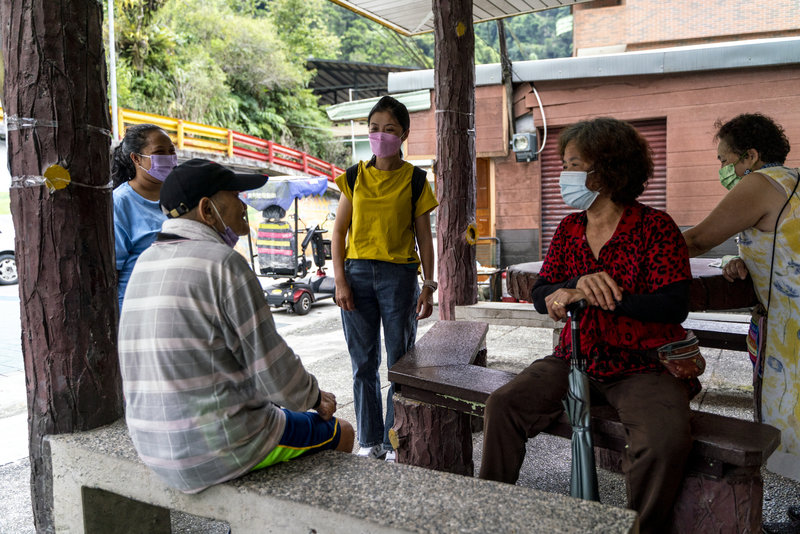
On a sunny August afternoon, a vegetable vending truck, playing the “Atayal Joyful Song”, arrived at the pavilion in front of the village grocery store. For the villagers, this was the daily signal to gather and chat with friends.
Ten years ago, 79-year-old Si-Lang Ku-Mai (Chinese name Lin Jin-Tu) started showing symptoms of cognitive impairment. These days, he rarely comes to the pavilion to hang out with old friends.
“Who is this?” “Is she your girlfriend?” “Is she your classmate?” Five or six elders gathered at the pavilion and started teasing him when he showed up. They were aware of his condition and would sometimes do these “mental exercises” with him. After Si-Lang’s memory began to deteriorate, he didn’t remember that the grocery-store owner’s husband had passed away years ago. He kept asking about the husband. The group didn’t correct him but instead said, “Oh! You haven’t come to chat in so long, so of course, you wouldn’t know!”
At the sunset, we followed Si-Lang back to his home. Another elder from the village, Chang Hsiu-Ying, who had moderate dementia, suddenly opened the door and entered without speaking a word. For several minutes she sat quietly before opened the door and walked out.
Diagnosed with vascular dementia six or seven years ago, Chang Hsiu-Ying’s language capacity has been impaired. She loved socializing but struggled to express herself. Now, she often “drops by” friends’ and relatives’ homes like this. Si-Lang’s family had grown used to these unannounced visits, and no one found it strange.
Chen Mei-Jhen commented that Si-Lang’s “deterioration has been really slow,” perhaps because he has remained in a familiar environment all these years. He had showed mild dementia symptoms when Mei-Zhen first started working in the village ten years ago. Now, his condition has only progressed to a moderate level.
As we left Si-Lang’s house, Chen Mei-Jhen posed a sharp question: What is the purpose of diagnosing elders and bringing them to dementia centers? If the goal [of dementia care] is socialization and activities, “Don’t you think that pavilion is already a dementia center?”

The situation in these two villages highlights the gap between the indigenous care culture and the government’s vision.
The reporter interviewed Long-Term Care Division Director Chu Chien-Fang, who defended current policies. She explained that the thresholds set by these policies, including the minimum number of participants required for dementia centers, have already been adjusted for indigenous regions. Specifically, the ideal number of participants for dementia care centers in general areas is 6–15, whereas this has been adjusted to 3–8 for remote areas. The government provides funding for every dementia center, and Zhu argued that funding centers serving only one or two elders would not be feasible.
Wang Tsen-Yung, a professor of Graduate Institute of Social Work at National Chengchi University, who has focused on indigenous long-term care for nearly 20 years, lamented:
“Current long-term care policies are another form of cultural colonization and invasion for the villages.”
Wang argued that the rationale behind Taiwan’s long-term care is “a one-size-fits-all paradigm created by the central government,” yet care is deeply tied to culture and cannot be standardized. “Everyone eats, but that doesn’t mean everyone eats the same food. You need to prepare meals that align with local culture for elders to feel truly cared for.”
However, from policies to “pilot programs,” the government has by far encouraged indigenous communities to follow its own long-term-care model. Wang believes the government should instead consider, “What is the indigenous definition of ‘good care’? What is their vision for care?” and then give the groups space to develop services that reflect their cultural characteristics—services not yet seen in the existing long-term care systems.
He pointed out that indigenous groups value “collective care”. However, by ranking different levels of care, categorizing elders (based on their condition), and assigning them to different facilities, the government inadvertently fragments the network of the villagers, undermining their invaluable collective care mechanisms.
Finally, Wang raised another critical concern: The challenge in indigenous areas is the extreme lack of resources for elders with moderate to severe disabilities or dementia. According to the current policies, do we have to wait until all indigenous organizations have enough funding and resources based on the government’s standards before their elders can receive proper care?
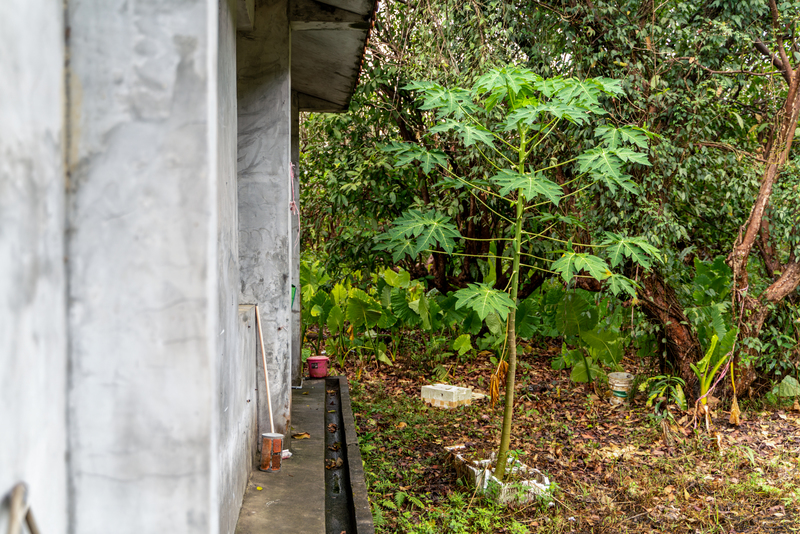
In early September 2022, Lapi took us back to the Hanxi Dementia Care Center. Behind the center, in the fields, she had planted pumpkins, cucumbers, and papayas with three elderly dementia patients in a class a year earlier. To her surprise, the papaya seeds they planted had grown into a tall tree and even borne fruit during the nine months since the center closed. Excitedly, she jumped and shouted, “I must tell the elders! I need to show them this!”
But Ba’ai will not be able see it with her own eyes, since she is now far away in a care facility in Yilan City.
Yunaw was bustling around the village, attempting once again to apply to create a homecare agency, hoping this time it will give the elders a chance to stay in their community.
In the Hanxi village, people are still waiting for their dementia-affected loved ones to return home.
(To read the Chinese version of this article, please click: 難在部落終老的夢──當文化與長照規範衝突,原民失智照顧缺憾多)
深度求真 眾聲同行
獨立的精神,是自由思想的條件。獨立的媒體,才能守護公共領域,讓自由的討論和真相浮現。
在艱困的媒體環境,《報導者》堅持以非營利組織的模式投入公共領域的調查與深度報導。我們透過讀者的贊助支持來營運,不仰賴商業廣告置入,在獨立自主的前提下,穿梭在各項重要公共議題中。
今年是《報導者》成立十週年,請支持我們持續追蹤國內外新聞事件的真相,度過下一個十年的挑戰。